
How to Mop Tiles Without Leaving Streaks
21 September 2026 · Jessica Gao
If your tiles look worse after you mop them, the problem is rarely the tiles. Mopping tiles without streaks is mostly about using less cleaner, keeping the mop only damp, and drying the floor instead of leaving it to air-dry.
Why do tiles streak after mopping?
Ceramic and porcelain tiles have a smooth, glazed surface, so anything left on top of them shows up. The usual culprits are:
- Too much detergent. Leftover soap dries into a cloudy film.
- A wet mop. Puddles dry unevenly and leave water marks.
- Dirty water. Grime goes straight back onto the floor.
- Air-drying. Water and cleaner dry in lines where the mop passed.
How do you mop tiles without streaks?
- Sweep or vacuum first. Grit and hair smear when they get wet.
- Go light on cleaner. A small amount of mild detergent in a bucket of warm water is plenty for everyday cleaning.
- Wring the mop well. The pad should be damp, not dripping.
- Mop in overlapping S-shaped strokes. Work from the far side of the room back towards the door.
- Rinse the pad often. Change the water as soon as it looks cloudy.
- Rinse if you need to. If you've used too much cleaner, go over the floor again with clean water.
- Dry the tiles. Buff with a dry microfibre pad or cloth. This is the step that removes the haze.
What about the grout?
Grout sits lower than the tiles and is porous, so it holds onto dirt. For everyday mopping, a damp pad is enough. For marked grout, make a paste of bicarb soda and water, work it in with a stiff brush, then wipe the area clean with a damp cloth. Avoid harsh acids, which can wear grout over time.
Can you use vinegar on tiles?
Diluted vinegar is a common home remedy for glazed ceramic and porcelain tiles, but check your tile maker's care guide first. Never use vinegar or other acidic cleaners on natural stone tiles such as marble, limestone or travertine. Acid etches the surface and leaves dull marks that won't come out.
What's the fastest way to dry a tiled floor?
A squeegee edge or a dry microfibre pad. Pull any standing water towards one spot, lift it, then buff the rest of the floor dry. It's quick, and it's the difference between a clean floor and a streaky one.
A mop that makes the damp-not-wet part easy
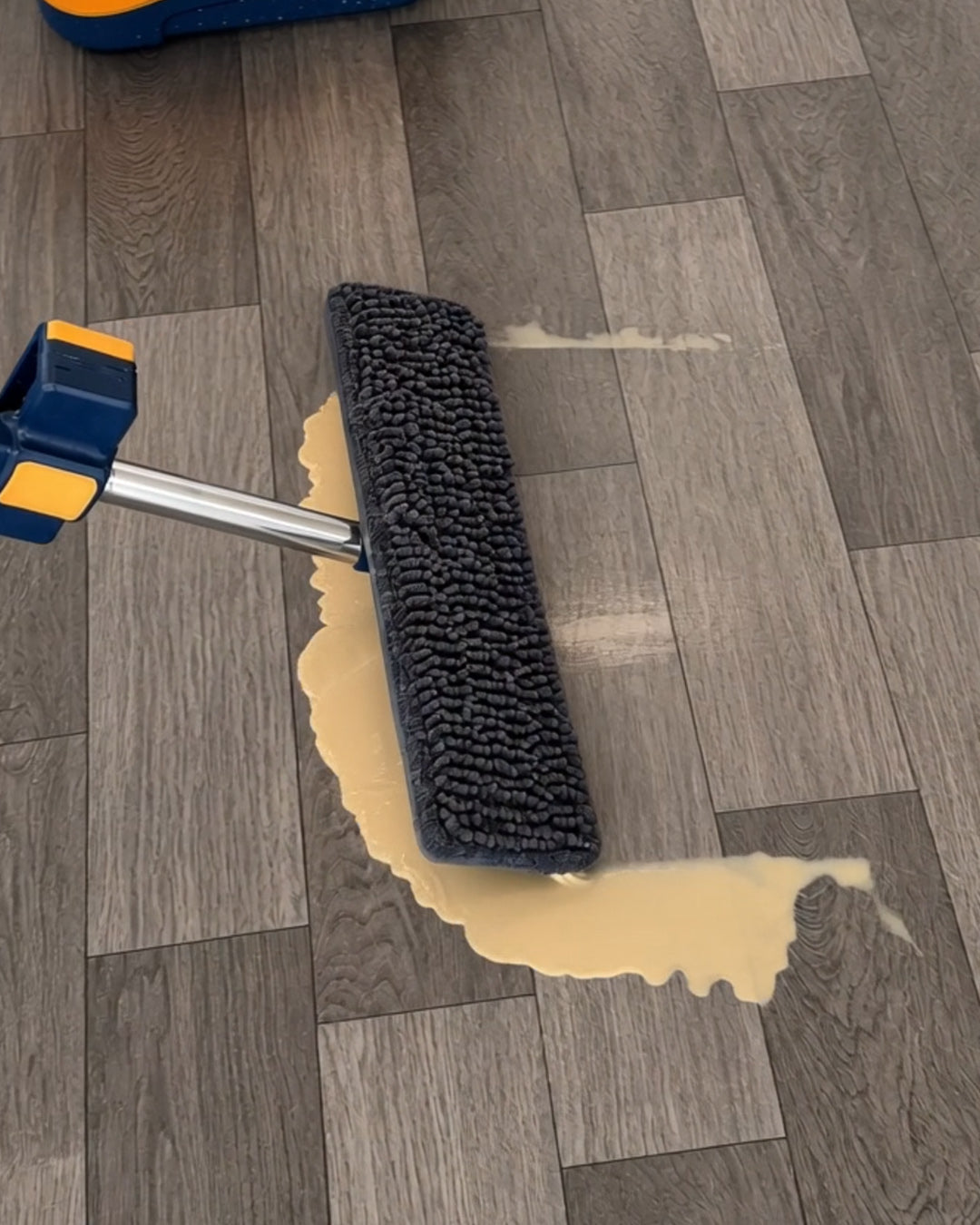
The Cleanmatic 8-in-1 flat mop and bucket set wrings itself. Pull the mop back through the double scrapers and the pad comes out damp and ready, with no hands in the water. The squeegee edge clears spills, and the built-in detergent chamber lets you add cleaner a little at a time instead of guessing at a bucketful.
For the full routine on every floor type, read how to mop floors properly.