
Choosing a Floor Cleaner When You Have Pets
08 October 2026 · Jessica Gao
Pets walk on the floor all day, then lick their paws. That's why people ask which floor cleaner is safe to use around them. Here's what to check before you mop, and who to ask if you're unsure.
What should you check on the label?
- Dilution. Use the amount the label states, or less. More cleaner doesn't clean better, and it leaves residue behind.
- Rinsing. Some cleaners are meant to be rinsed off. If yours is, rinse.
- Warnings and first aid instructions. Read them before you use the product, not after.
- What it's made for. A cleaner made for your floor type is less likely to be used in a way that leaves residue.
What do vets say about essential oils?
Some oils used in cleaning and diffusing are a problem around animals. North Road Veterinary Centre lists tea tree, eucalyptus, camphor, clove and wintergreen as particularly hazardous, and describes tea tree oil as one of the most toxic oils to pets, even in small amounts. If a cleaner is scented, check what's in it.
Australia has an Animal Poisons Helpline on 1300 869 738 for advice if a pet is exposed to something. Your own vet is the best guide for your animals.
How do you mop with pets in the house?
- Put the pet in another room while you mop.
- Use a barely damp pad. Less liquid means less residue and a faster dry.
- Rinse if the label says to.
- Dry the floor rather than leaving puddles.
- Keep the pet off the floor until it's dry.
- Store the bottle out of reach, not under the sink with the door open.
What about a plain water clean?
For everyday passes, warm water on a microfibre pad lifts a lot on its own, so you can keep the cleaner for when the floor actually needs it. Skip vinegar on natural stone and on timber, where flooring suppliers recommend a pH-neutral cleaner instead.
Keep the cleaner off the floor and on the pad
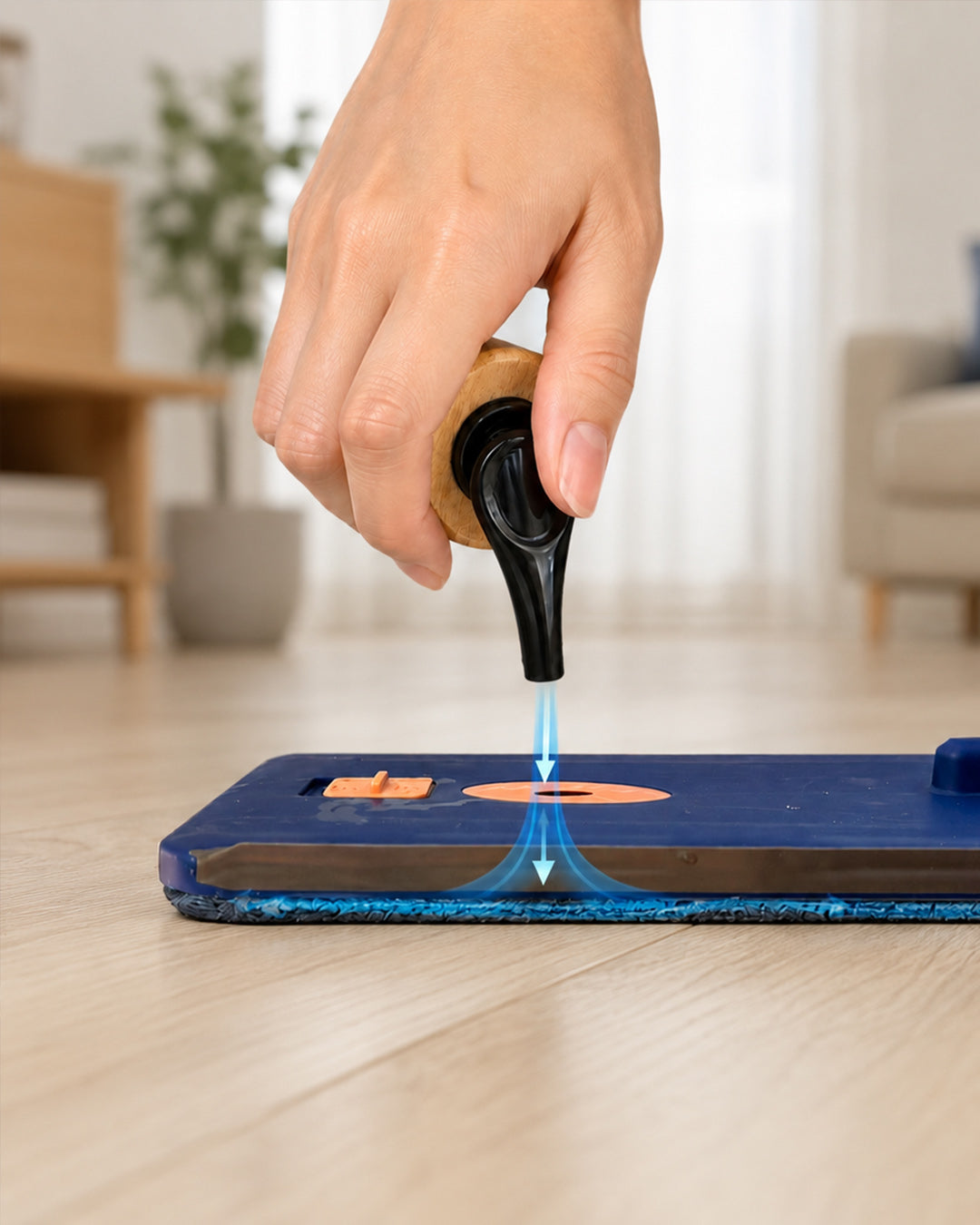
The Cleanmatic 8-in-1 flat mop and bucket set has a built-in detergent chamber that feeds cleaner to the pad, so the bucket water can stay plain for rinsing and you're not pouring product straight onto the floor. The mop wrings itself through double scrapers, and your hands stay on the handle.
For dosing, read what to put in mop water. For the wider routine, read how to clean floors when you have pets and kids.
Frequently asked questions
Is vinegar safe to clean floors with pets around?
Diluted white vinegar isn't usually considered harmful to pets once the floor is dry, but it's not right for every floor. Flooring suppliers advise against it on natural stone and timber, so use a pH-neutral cleaner made for your floor instead.
How long should pets stay off a freshly mopped floor?
Until it's completely dry. With a well-wrung microfibre pad that's usually only a few minutes. A wetter mop, or a cleaner that needs rinsing, takes longer.
Can you use bleach on floors if you have pets?
You don't need it for everyday floor cleaning. If you do use it, dilute it as the label says, rinse the floor, keep pets out until it's dry, and never mix it with other cleaners.
Related guides: What to put in mop water · How to clean floors with pets and kids · How to get dog hair off hard floors