
What to Put in Mop Water (and How Much)
30 September 2026 · Jessica Gao
It's easy to put too much in your mop water. Knowing what to put in mop water, and how much, is the quickest fix for streaky, sticky or dull floors.
What should you put in mop water?
Warm water and a floor cleaner made for your floor type, diluted exactly as the label says. That's it for everyday cleaning.
| Floor | What to add |
|---|---|
| Ceramic or porcelain tile | A small amount of mild detergent or tile cleaner |
| Sealed timber | A pH-neutral timber floor cleaner |
| Laminate | The cleaner your floor's maker recommends |
| Vinyl plank and hybrid | A pH-neutral, non-abrasive floor cleaner |
| Marble and natural stone | A cleaner labelled for stone |
Why does more detergent make floors worse?
Extra detergent doesn't get lifted off the floor. It dries into a thin film that looks cloudy, feels sticky and grabs dirt from the next pair of shoes that walks across it. If your floor feels tacky after mopping, rinse it with clean water and cut the amount next time.
Is vinegar a good idea?
It depends on the floor:
- Glazed tiles: diluted vinegar is a common home remedy, but check your tile maker's guide.
- Vinyl and hybrid: some makers allow a very dilute solution; others don't.
- Sealed timber: flooring suppliers recommend a dedicated pH-neutral cleaner instead.
- Marble and natural stone: never. Acid etches the surface permanently.
What should you never mix?
Don't combine different cleaning products in one bucket. In particular, never mix bleach with ammonia-based cleaners. The combination releases dangerous gases. Stick to one product, used as directed.
Hot or warm water?
Follow your cleaner's label. Warm water is the usual choice and very hot water isn't needed. For some floors, such as timber and laminate, the bigger concern is keeping the mop barely damp rather than the water temperature.
When should you change the water?
As soon as it looks cloudy or grey. Mopping with dirty water just moves the grime around.
A simpler way to add cleaner
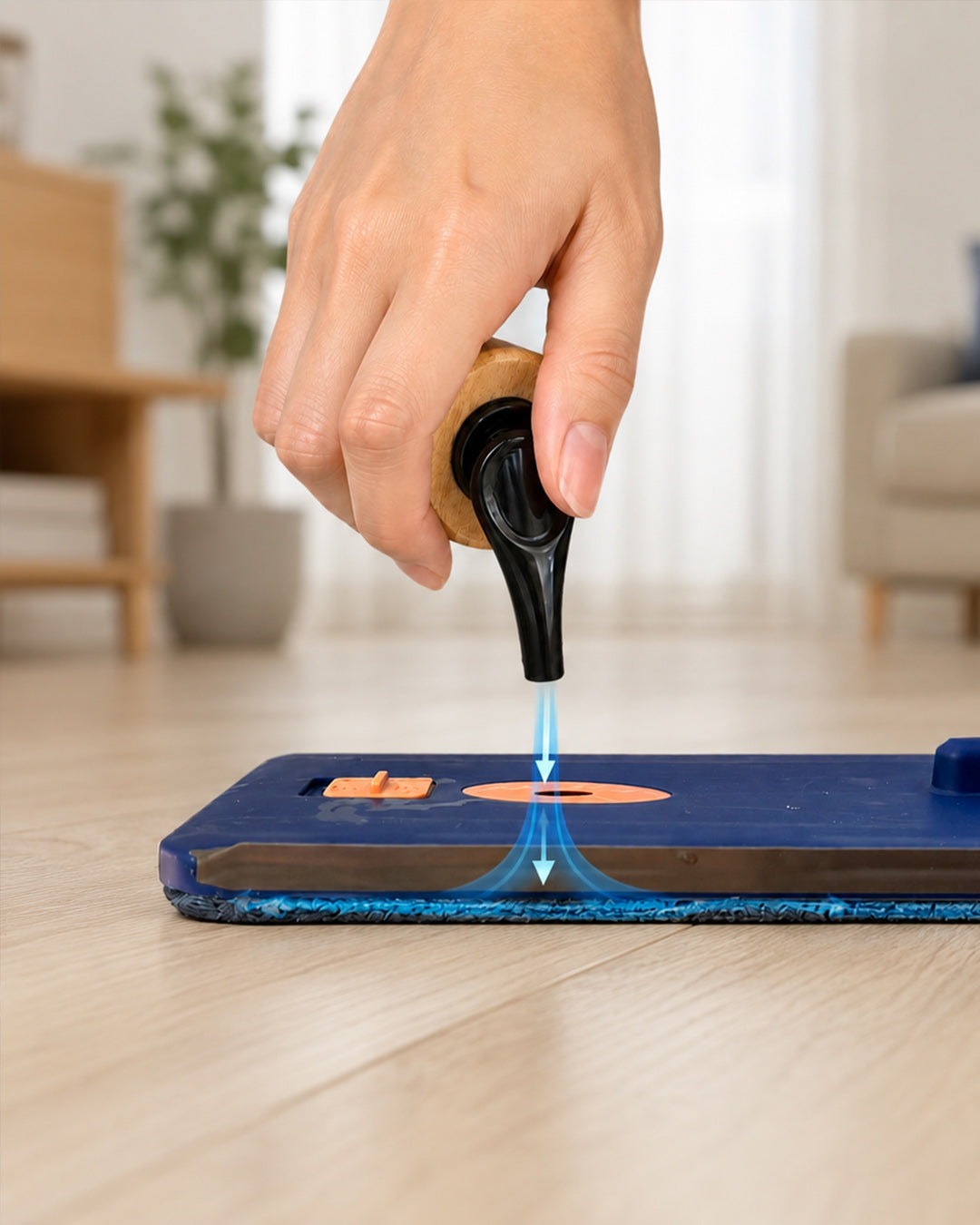
The Cleanmatic 8-in-1 flat mop and bucket set has a built-in detergent chamber that feeds cleaner straight to the pad, so you can keep the bucket for rinsing. The mop wrings itself through double scrapers, and your hands stay on the handle.
Mop water FAQs
Can you put dishwashing liquid in mop water?
A drop or two is fine on glazed tiles, but it's best avoided on timber, laminate, hybrid and vinyl, where it can leave a dulling residue. A floor cleaner made for your floor type rinses away more cleanly.
How much floor cleaner should you use?
The dose on the label, measured rather than poured by eye. More cleaner doesn't mean a cleaner floor; it means more film for dirt to stick to.
Can you add essential oils to mop water?
It's best not to. Oils can leave a slippery, smeary film, and some essential oils are harmful to pets. If you want a fresh smell, a clean mop and fresh water do more than any additive.
Do you need to rinse the floor after mopping?
Not if you use a pH-neutral cleaner at the label dose. If the floor feels sticky or looks cloudy, go over it once with plain warm water and a clean, well-wrung pad.
Related guides: How to mop tiles without streaks · How to clean hybrid & vinyl plank flooring · Why does my mop smell?
For the full step-by-step, read how to mop floors properly.