
The Best Mop for Tiles: What to Look For
01 October 2026 · Jessica Gao
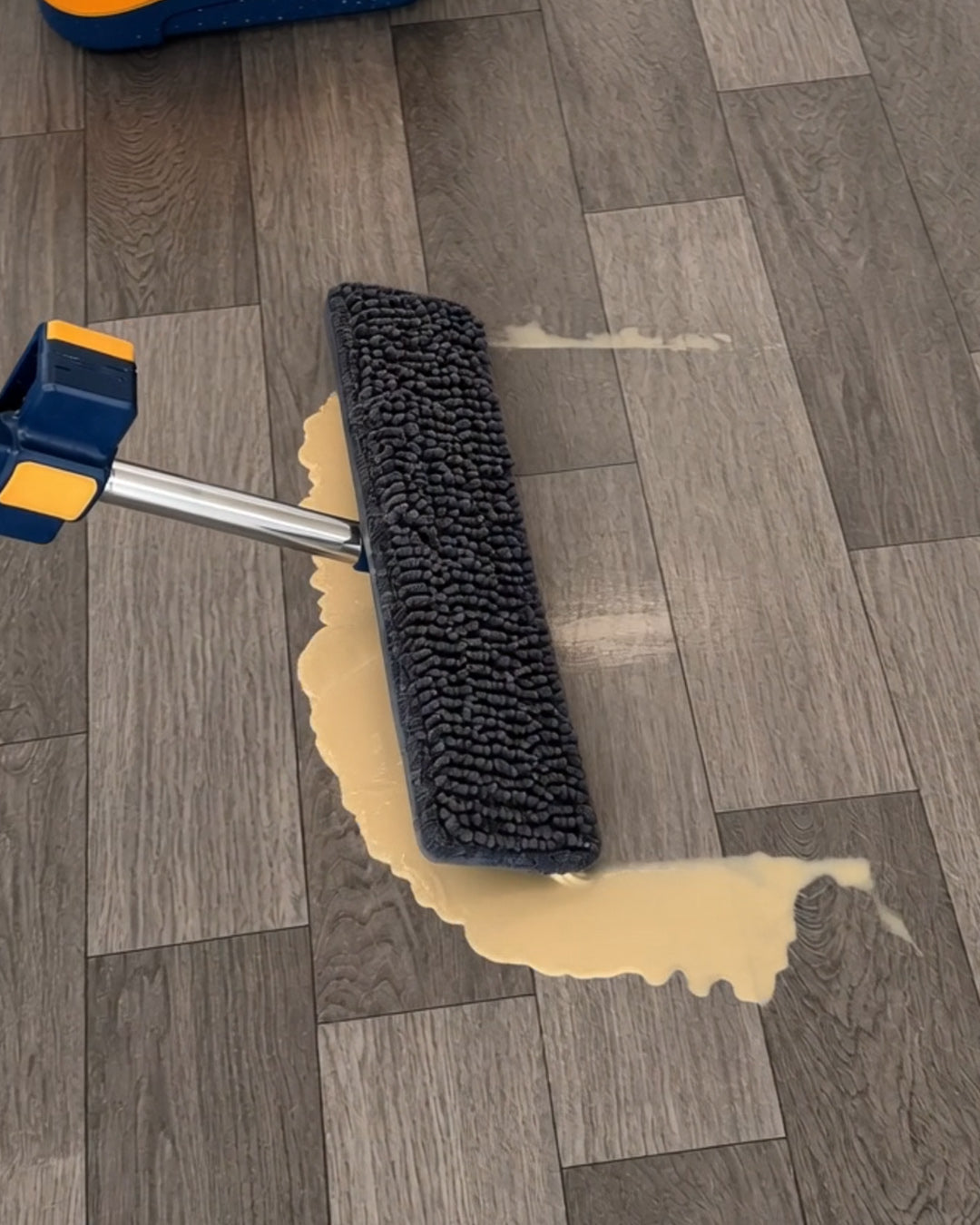
The best mop for tiles is a flat microfibre mop with a firm, even pad and a reliable way to wring it. Tiles are tougher than timber or hybrid flooring, but they show every streak, and grout lines trap dirt that floppy mops skate over. Here's what matters, how the main mop types compare on tile, and what we'd choose.
What makes tiles different to mop
Glazed ceramic and porcelain are hard and waterproof on top, so you can use a little more water than on timber. The catch is the finish: gloss tiles show haze and drying marks, and matt or textured tiles hold grime in their surface. Grout sits lower than the tiles and is porous, so dirty water collects there if the mop leaves it behind. A good tile mop has to lift dirt out of grout lines and leave the surface nearly dry.
What to look for in a mop for tiles
- Dense microfibre pad. It reaches into grout lines and textured surfaces and lifts grease rather than pushing it around.
- Firm, flat head. Even pressure across the whole pad means grout lines get cleaned, not skipped.
- Dependable wringing. Damp, not dripping, is the difference between a clean finish and streaks. A wringer or self-wringing bucket gives the same result every time.
- Clean rinse water. A bucket that separates clean and dirty water, or makes rinsing quick, stops grey water going back onto light grout.
- Machine-washable pads. Bathroom and kitchen floors need pads washed often; washable pads make that easy and cheap.
Which mop types suit tiled floors?
| Mop type | On tiles | Watch out for |
|---|---|---|
| Flat microfibre mop with wringer bucket | Best all-rounder | Rinse the pad often in busy kitchens |
| Spin mop | Good | Round heads miss corners and edges along cabinets |
| Spray mop | Good for quick spot cleans | Pads soil quickly on large tiled areas |
| Steam mop | Fine on glazed ceramic and porcelain | Not for natural stone or unsealed grout; check your sealer guidance |
| String or cotton mop | Works, but streaky | Holds too much water and spreads dirt into grout |
| Sponge mop | Good on textured tiles | Sponges hold bacteria and wear out quickly |
Choosing a mop by room
- Kitchen: grease and spills, so you need a pad that lifts oil and a quick rinse-and-wring between sections.
- Bathroom: small areas around the toilet and vanity, so a slim, flat head that gets into corners.
- Living areas with large-format tiles: big open runs, so a wide head and a light, low-water finish to avoid drying marks.
- Outdoor or textured tiles: a firmer pad or a brush first, then the mop.
Our pick for tiled floors
The Cleanmatic self-wringing flat mop and bucket suits tiled floors well. You push the mop through the double scrapers and the microfibre pad comes out evenly damp every time, with your hands out of the water. The flat head runs right along kickboards and into bathroom corners, and the squeegee edge helps you clear spills and wet patches before they dry into marks. It folds flat for storage and comes with a 7-day money-back guarantee.
Shop the Cleanmatic mop and bucket set →
Best mop for tiles: FAQs
What is the best thing to mop tiles with?
Warm water with a small amount of pH-neutral floor cleaner, and a well-wrung microfibre pad. More cleaner doesn't mean cleaner tiles; it means more haze.
Are spin mops good for tiles?
Yes, they're a good option, but round heads miss corners and edges. A flat mop covers those better.
Can you use a steam mop on tiles?
Usually on glazed ceramic and porcelain, yes. Avoid steam on natural stone, and check that your grout is sealed and in good condition first.
What mop is best for grout lines?
A flat mop with a dense microfibre pad, pressed evenly. For deep grout cleaning, use a grout brush first and mop afterwards.
Related guides: How to mop tiles without streaks · What to put in mop water · Best mop for hybrid floors · Cleanmatic mop and bucket