
Mop and Bucket With Wringer: How Each Type Works
13 October 2026 · Jessica Gao
Wringing is the hard part of mopping. A good wringer means a mop that's damp, not dripping, and hands that stay out of the dirty water. Here's how each type of mop bucket with a wringer works, and which floors and homes each one suits.
Why does the wringer matter so much?
A mop that's too wet leaves puddles, streaks and a floor that takes ages to dry. On timber, laminate and hybrid, standing water can get into the joins. The wringer controls how wet the mop is, so it controls how the floor turns out.
Press and roller wringers
How it works: a wringer box sits on the bucket. You put the mop head in and push down a lever or handle, which squeezes it between plates or rollers.
Good for: cotton string mops and big, wet jobs.
Watch for: they're bulky, and the bucket is usually rigid, so it takes up space.
Spin baskets
How it works: the mop head sits in a basket in the bucket and spins, throwing the water out. Some use a foot pedal, some use a pump action on the handle.
Good for: round microfibre heads and quick wringing without touching the mop.
Watch for: the round head doesn't reach into corners as well as a flat one, and you can spin more or less, so dampness takes a bit of practice.
Scraper slots for flat mops
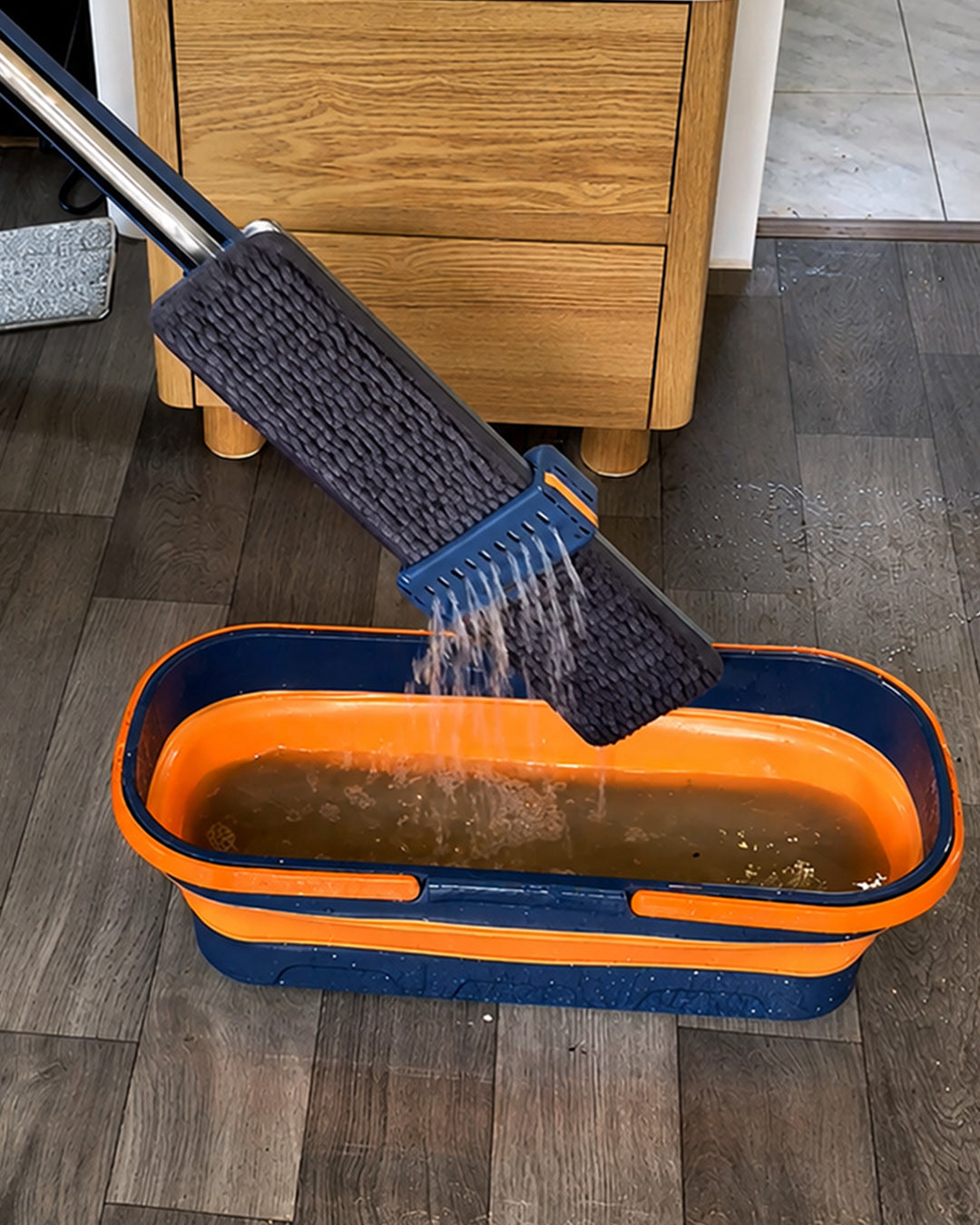
How it works: a slot in the bucket has a scraper edge. You push the flat pad down into the water to rinse it, then pull it back up through the scraper, which squeezes the water out. It's the flat mop version of a mop squeeze bucket.
Good for: flat microfibre mops, sealed timber and laminate, and anyone who wants control over how damp the pad is. More passes through the scraper means a drier pad.
Watch for: the pad has to fit the slot, so the mop and bucket usually come as a set.
Wringing by hand
Plenty of buckets have no wringer at all. It works, but your hands go into dirty water and it's hard to wring a mop evenly. If you're choosing a new bucket, a built-in wringer is worth it.
Which is best?
It depends on the mop you want to use. String mops suit press wringers, round microfibre heads suit spin baskets, and flat pads suit scraper slots. For a side-by-side look at the mops themselves, read flat mop vs spin mop vs string mop.
A scraper wringer that does the work
The Cleanmatic 8-in-1 flat mop and bucket set uses a double scraper built into a collapsible bucket. Dip the pad to rinse it, pull it back through, and it comes out damp. Once for tile, a few times for close-to-dry on timber. Your hands stay on the handle.
For everything else to think about, read how to choose a mop and bucket.
Frequently asked questions
Which wringer is easiest on your back?
One you can use standing up, such as a foot-pedal spin basket or a pull-through scraper. Wringing by hand means bending over the bucket every time you rinse.
Do mop wringers work with any mop?
Usually not. Each wringer is designed around its own mop head shape, so a scraper slot made for a flat pad won't wring a round spin head, and the other way round.
Can you replace a broken wringer?
Some makers sell spare parts, while others only sell the whole set. Check before you buy if you want something that can be repaired rather than replaced.
Related guides: How to choose a mop and bucket · Spin mop vs flat mop · Cleanmatic mop and bucket