
Steam Mop vs Mop and Bucket
16 October 2026 · Jessica Gao
Steam mops promise a clean floor with nothing but hot water. A mop and bucket is the old way. Which is right for your home depends mostly on what your floors are made of. Here's an honest look at a steam mop vs a mop and bucket.
How do they work?
- A steam mop heats water into steam and pushes it through a pad as you clean. No bucket, and usually no detergent.
- A mop and bucket uses water, with or without a cleaner, and relies on wringing to control how wet the floor gets.
Which cleans better?
For stubborn, stuck-on marks, steam has an edge. CHOICE's testing found manual mops need more elbow grease than steam mops to shift stains. For everyday dirt, a well-wrung mop and clean water do the job.
What about timber, laminate and hybrid?
This is where it matters. Heat and moisture together can stress floor finishes and push moisture into the joins between boards. Many timber flooring retailers advise avoiding steam on timber altogether and using a well-wrung mop with a cleaner suited to the finish.
Laminate and hybrid vary by brand. Some manufacturers say no to steam, some allow it with conditions. Check your flooring manufacturer's care instructions before you use a steam mop, because using the wrong method may affect your warranty.
Our guides to mopping timber floors and mopping laminate floors go into more detail.
Where does steam work well?
- Sealed ceramic and porcelain tiles
- Stuck-on marks in kitchens
- Grout lines, with the right attachment
Where is a mop and bucket the safer choice?
- Timber, and any floor where the manufacturer says no steam
- Big, dirty jobs where you want to rinse the pad often
- Homes with a mix of floors, where one tool needs to suit them all
Other things to weigh up
| Steam mop | Mop and bucket | |
|---|---|---|
| Power | Usually needs a power point and a cord | None |
| Heat-up time | Usually a short wait | Ready once the bucket's filled |
| Running cost | Electricity | Water and cleaner |
| Storage | Main unit plus pads | Mop plus bucket |
Our take
If you mostly have sealed tile, a steam mop is a good tool to have. If you have timber, laminate, hybrid or a mix, a mop and bucket you can wring to barely damp is the safer everyday choice.
A mop you can control
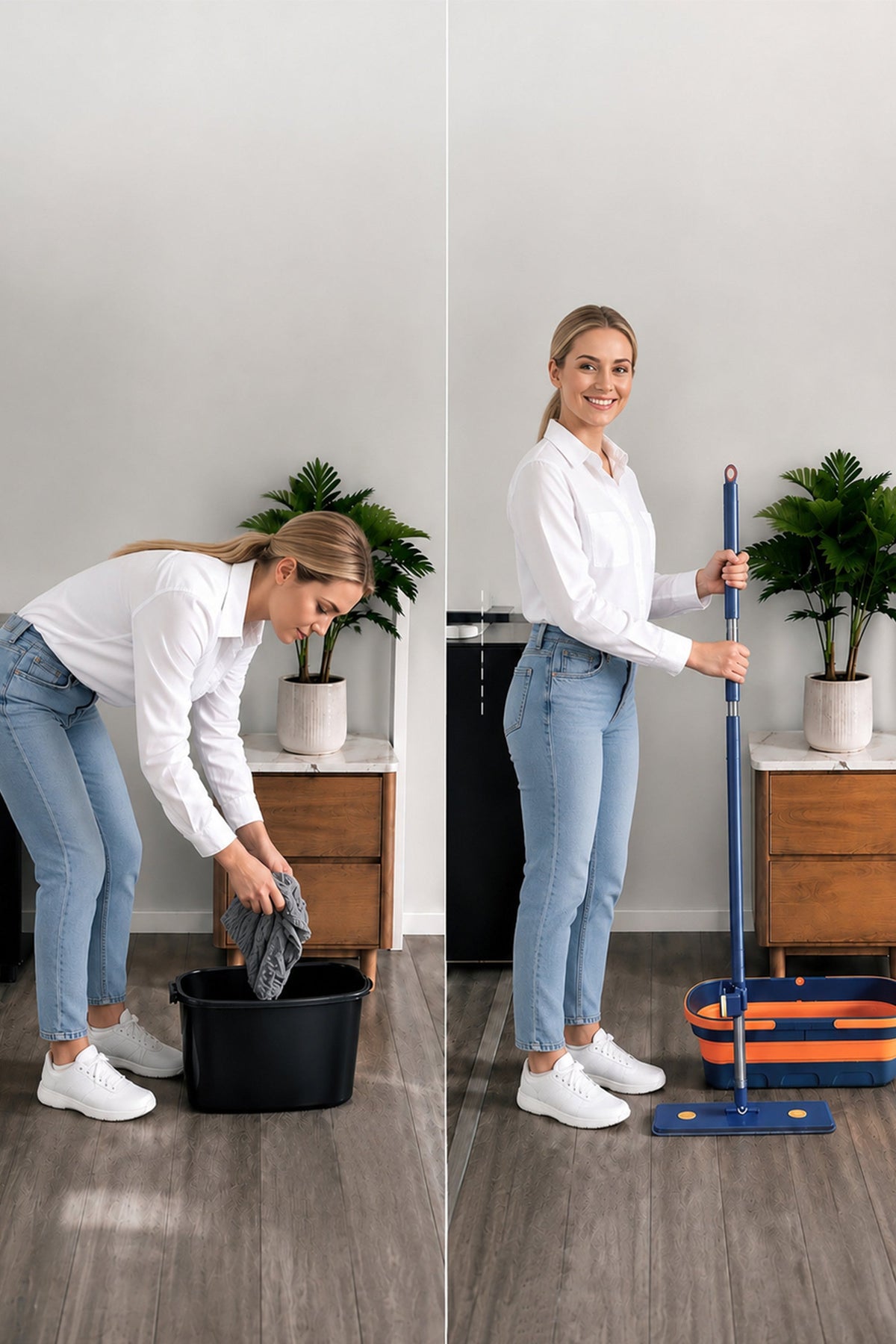
The Cleanmatic 8-in-1 flat mop and bucket set lets you set how damp the pad is: pull it through the bucket's double scraper once for tile, a few more times for close-to-dry on timber. No cord, no heat-up, and your hands stay on the handle.
For everything else to think about, read how to choose a mop and bucket.
Frequently asked questions
Can you use a steam mop on tiles?
On sealed, glazed ceramic and porcelain, generally yes. Check the grout sealer and the tile maker's advice first, because heat can affect some sealers.
Does a steam mop need cleaning products?
Most are designed for water only, and adding cleaner can damage some models. Check the manual before putting anything in the tank.
Can a steam mop damage vinyl or hybrid flooring?
It can. Many vinyl and hybrid makers advise against steam, because heat and moisture can affect the joins and the wear layer. Check your flooring warranty first.
Related guides: How to choose a mop and bucket · Spray mop vs mop and bucket · How to mop timber floors · Cleanmatic mop and bucket