
How Often Should You Mop Your Floors?
02 October 2026 · Jessica Gao
There's no single rule for how often you should mop, because a busy kitchen and a spare bedroom live very different lives. Here's a practical schedule based on foot traffic, floor type and who's living in the house.
How often should you mop each room?
| Area | Sweep or vacuum | Mop |
|---|---|---|
| Kitchen | Most days | Weekly, plus spills as they happen |
| Entry and hallway | A few times a week | Weekly |
| Bathroom and laundry | Weekly | Weekly |
| Living areas | A few times a week | Weekly or as needed |
| Bedrooms and spare rooms | Weekly | Every few weeks |
Treat this as a starting point. Adjust it to your household.
What changes how often you need to mop?
- Kids and pets. More footprints, crumbs and spills mean more frequent mopping in the busy zones.
- Shoes indoors. Outdoor grit builds up quickly in entries.
- Cooking habits. A kitchen that sees a lot of frying needs mopping more often.
- The season. Wet months bring more mud through the door.
Does floor type matter?
Yes. Sealed timber is best damp-mopped no more than about once a week, with dry sweeping in between, because too much water isn't good for it. Tiles, vinyl and hybrid floors cope with more frequent mopping as long as the mop is only damp.
Do you need to sweep before you mop?
Not with a wide flat microfibre mop. It picks up crumbs, dust and hair as you go, so it sweeps and mops in the same pass. Between mops, a quick sweep or vacuum of the busy areas stops grit from scratching the floor.
How can you make mopping quicker?
- Keep the mop and bucket somewhere easy to reach.
- Do a quick spot clean on spills straight away instead of waiting.
- Use a mop that wrings itself, so rinsing and wringing are quick.
- Finish with a dry pass so floors are ready to walk on sooner.
Less effort each time
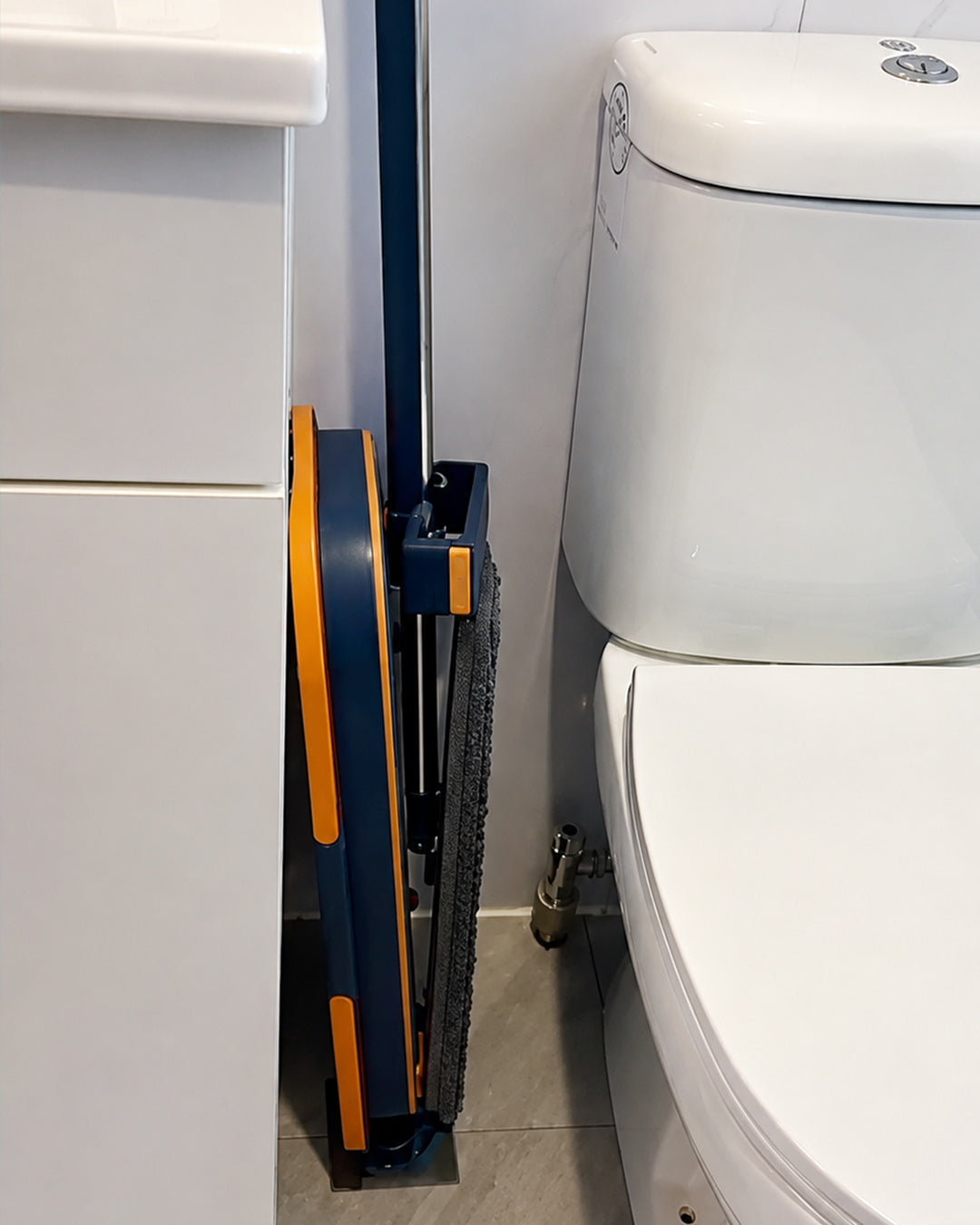
The Cleanmatic 8-in-1 self-wringing flat mop and bucket set is built for quick, frequent cleans. Push the mop into the bucket, pull it back through the double scrapers, and keep going. The bucket folds flat, so it's easy to store somewhere handy.
For technique, read how to mop floors properly.
Frequently asked questions
Is it bad to mop every day?
Not if the mop is only damp. Daily mopping suits busy kitchens and entries, and homes with kids or pets. On sealed timber, keep to about once a week and spot-clean spills in between, because frequent moisture wears the finish.
How often should you change the mop water?
As soon as it looks cloudy or grey. In a busy house that can be once per room. Mopping with dirty water puts grime back on the floor and is a common cause of streaks.
How often should you wash the mop pad?
After every mop. Machine wash microfibre pads in warm water without fabric softener, then let them dry fully. A damp pad left in the bucket is what starts the smell.
How long should a floor take to dry after mopping?
With a well-wrung microfibre pad, usually a few minutes. If it stays wet much longer, the pad was too wet. Wring it again or finish with a dry pass.
Related guides: How to mop floors properly · What to put in mop water · How to mop timber floors · How to mop tiles without streaks